Most living rooms are set up for the TV, not the record player. That’s fine, until the day you actually want to sit down and listen — really listen, no scrolling, no second screen, just you and whatever’s spinning. That kind of listening asks a little more of a room, and it usually comes down to less than you’d expect. Our team at Pardini Appliance loves this shift, honestly, because it means the furniture finally gets to be the star instead of the speakers!
Start With Seating That Invites You to Stay
Where you actually plant yourself can matter more than anything wired into the wall. If the seat you’re in has you shifting around after twenty minutes, you’re not going to make it through the whole record, no matter how good it sounds. The goal isn’t a chair that photographs well from across the room — it’s the one you’d elbow someone else in the house out of the way for.
- Deep sofas and sectionals: A sofa with real seat depth means you can actually curl up. We’re talking legs tucked under you, fully stretched out, whatever gets you comfortable for a full album side. If your current sofa nudges you forward after a few minutes, it’s built for quick sits, not long ones.
- Supportive lounge chairs: There’s almost always one chair in a listening setup that everyone quietly claims as theirs. It’s usually a lounge chair with a high back and real arm support, the kind you can sink into without needing a throw pillow to make it work.
- Recliners and rocking chairs: Don’t write either of these off as old-fashioned. A recliner lets you fully check out for forty-five minutes, and a rocking chair has this built-in rhythm that somehow makes a long session feel shorter, not longer.
Pro Tip:
Angle your main seat slightly into the room instead of squaring it flush against a wall. It’s a small move, but it’s the difference between a corner that feels like a waiting room and one that feels like it was built on purpose.
Storage That Works With the Ritual
Clutter is the fastest way to kill the mood in a room built around slowing down. It’s hard to lose yourself in a record when there’s a tangle of cables and three remotes sitting in your sightline. A media console and some real shelving handle that without making the room feel sterile.
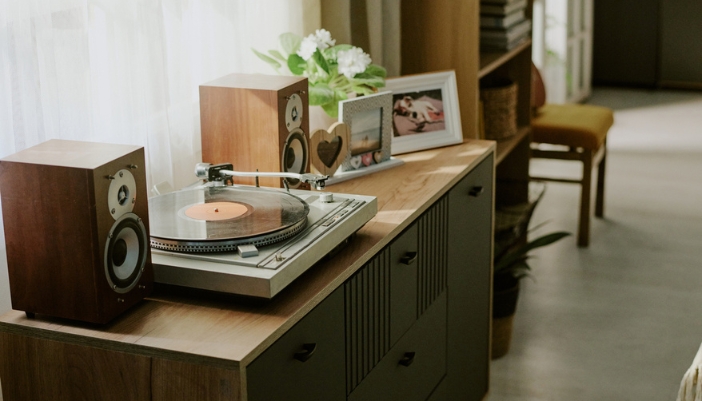
- Media consoles: Look for one that mixes open and closed storage. The open shelving is for what you actually want to see and reach for — the turntable, the records currently in rotation — while the closed cabinets are where the remotes and cable mess disappear, so the room still feels calm.
- Record storage and display shelving: A shallow bookcase pulls double duty here: wide enough to face out a few favorite covers like little pieces of art, deep enough to hold the rest of the collection standing upright without anything getting crushed.
- Side tables and surface space: You need somewhere to set a drink down without getting up mid-song to hunt for a coaster. A small side table near your main seat solves this without adding bulk to a room that’s supposed to feel open.
Arrangement That Pulls the Room Together
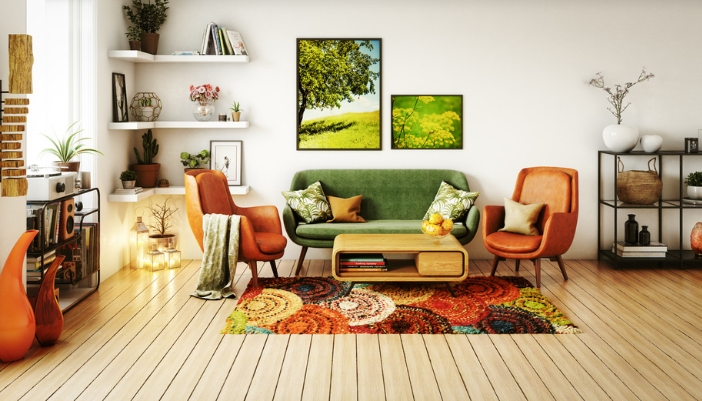
Even the best furniture falls flat if it’s arranged like an afterthought. A few small layout choices are the difference between a room that pulls you in and one that just happens to have a chair in it.
- Create a focal point: Let the music be the thing everyone’s seating points toward, whether that’s the console, the shelving, or wherever the sound is actually coming from. It’s the same instinct as orienting a living room around a TV — just swap the screen for the setup.
- Leave room to move: A room stuffed with furniture stops feeling calm no matter how comfortable each piece is on its own. Keep at least three feet of walking space between the main pieces, and even a small room will feel like it has room to breathe.
- Try a dedicated zone within a larger room: You don’t need a spare room for any of this. A great chair, a side table, a small console, and a rug to hold it together can carve out a real listening corner inside a living room you’re already using for everything else.
Texture and Warmth — The Details That Do More Than You’d Think
What a room is made of changes how it feels to sit still in it, and a listening room asks you to sit still more than most rooms do. Soft surfaces and warm materials do a lot of quiet work here, even if acoustics are the last thing on your mind.
- Upholstered seating: Fabric and velvet just feel warmer to sink into than leather or anything hard-surfaced, and they happen to soften the sound in the room a little too — no deliberate acoustic work required.
- A well-placed rug: Beyond tying the seating together visually, a rug under the main grouping cuts down on the echo you get from bare flooring, so the room feels warmer than it looks.
- Warm wood tones: Bookshelves, consoles, and side tables in a warm wood finish ground the space and keep it from feeling too showroom-new. They work whether your style leans vintage or something cleaner and more modern.
The Room Worth Coming Back To
None of this requires tearing a room down to the studs — it’s mostly a matter of picking pieces that hold up to actually being used and arranging them like the room has a purpose. If you’re working through a listening corner or a full dedicated space, stop in and ask our team at Pardini Appliance. We’ll help you figure out whether you really need a sectional, one great chair, or just a better console for the records, and you can get a feel for our sofas, lounge chairs, and consoles in person before you commit to anything.